
See Beyond The Noise.
Andrew McCurry and Langston Keyes · August 13, 2026
An Exploration of The Technological Architecture Defining The Next Decade.
One of humanities biggest dilemmas is fearing what we do not understand. There is a substantial amount of conjecture incorrectly depicting humanities ruin as a result of AI. AI is a controllable program derived from machine learning that will answer a query or accomplish tasks on behalf of a person. This tool will reshape what humanity has thought to be possible.
AI's profitability and usefulness to the average person has been an ongoing topic of contention for years. There is a massive information gap between ai skeptics and early adopters. The rudimentary knowledge in this document will allow you to make a more informed decision for AI’s potential usefulness to your daily life or enterprise as well as investment opportunities before its applications are widely adopted.

AI is not in a “bubble”
The biggest companies on earth are currently funding the greatest expansion of infrastructure in human history. There are trillions of dollars flowing into the development of AI and this spending is forecast to increase through 2030. Since 2023, the stock markets exceptional growth has led many to believe that we are in a bubble. AI hasn't dramatically increased productivity across the economy yet which has lead people to believe we're in a speculative and irrational market. This is not the case. This bull market is being fueled by companies balance sheets. Consistent earnings reports increases in revenues and operational cash flows across all sectors of the market is not a sign of a bubble. The demand for what powers AI is insatiable and supply will not catch up for years to come. The massive investment in AI infrastructure is the beginning of the next expansion of our world. There is a long road ahead to complete this buildout, but once complete the productivity will lead to historic returns.
- $7T
- Investment flowing into data centers by 2030
- $700B+
- Hyperscaler capex in 2026 alone
- 3x
- Data center demand growth by 2030
- 60%
- More transmission capacity needed by 2030
AI as a five layer cake
Bottom to top — energy at the base, applications on top. Select a layer to jump to it.
Layer 1
01
Energy
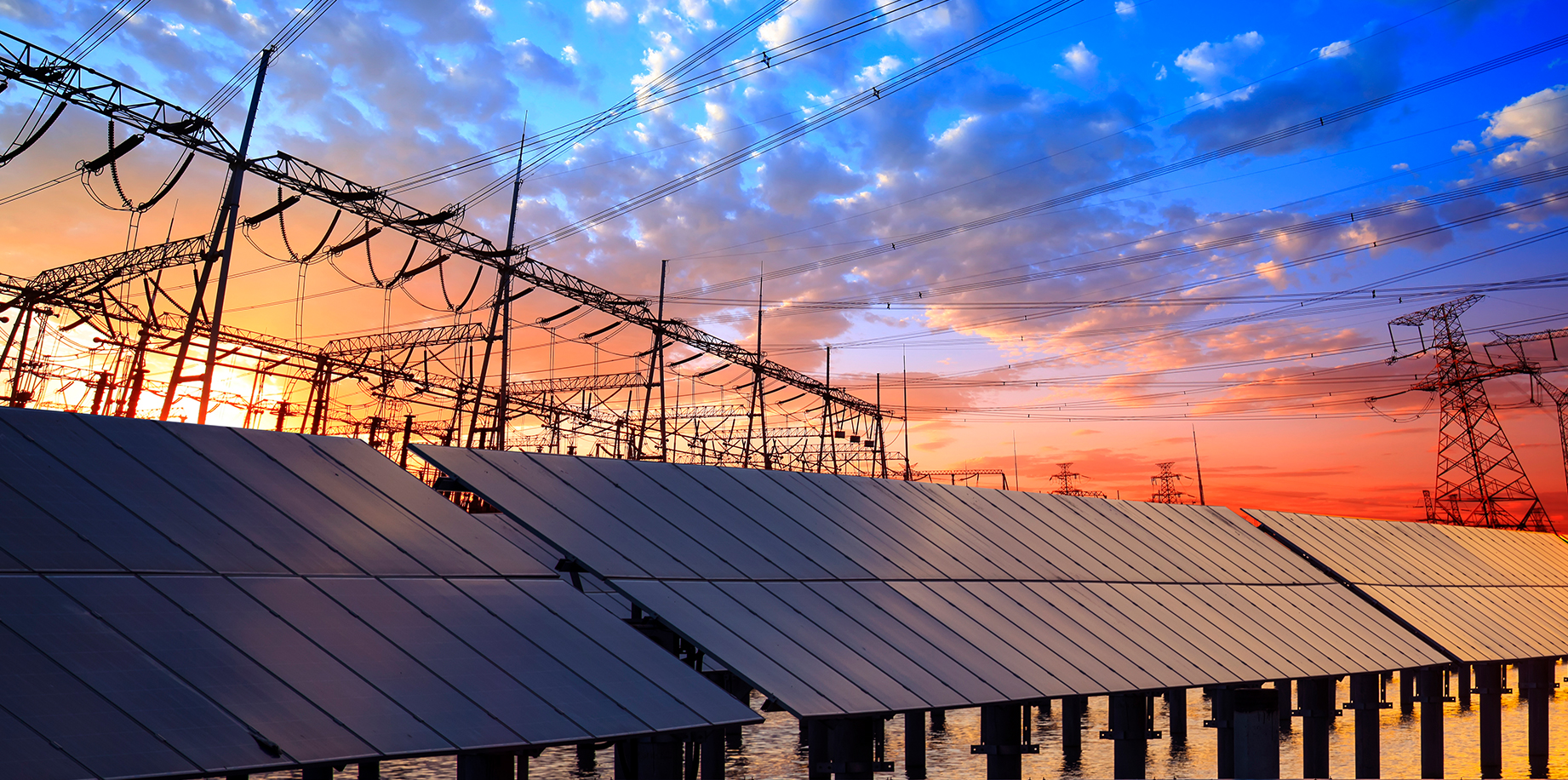
With the rapid development of data centers and evolution of AI models, electricity is becoming one of the most important resources on the planet. The need for developing more electrical capacity expands far past the development of AI. Our current electric grid and ability to generate energy are not suitable for the demands of the modern world. Expanding our electrical grid and developing more sources of power will be one of if not the most important area in expanding our infrastructure to integrate AI into the world.
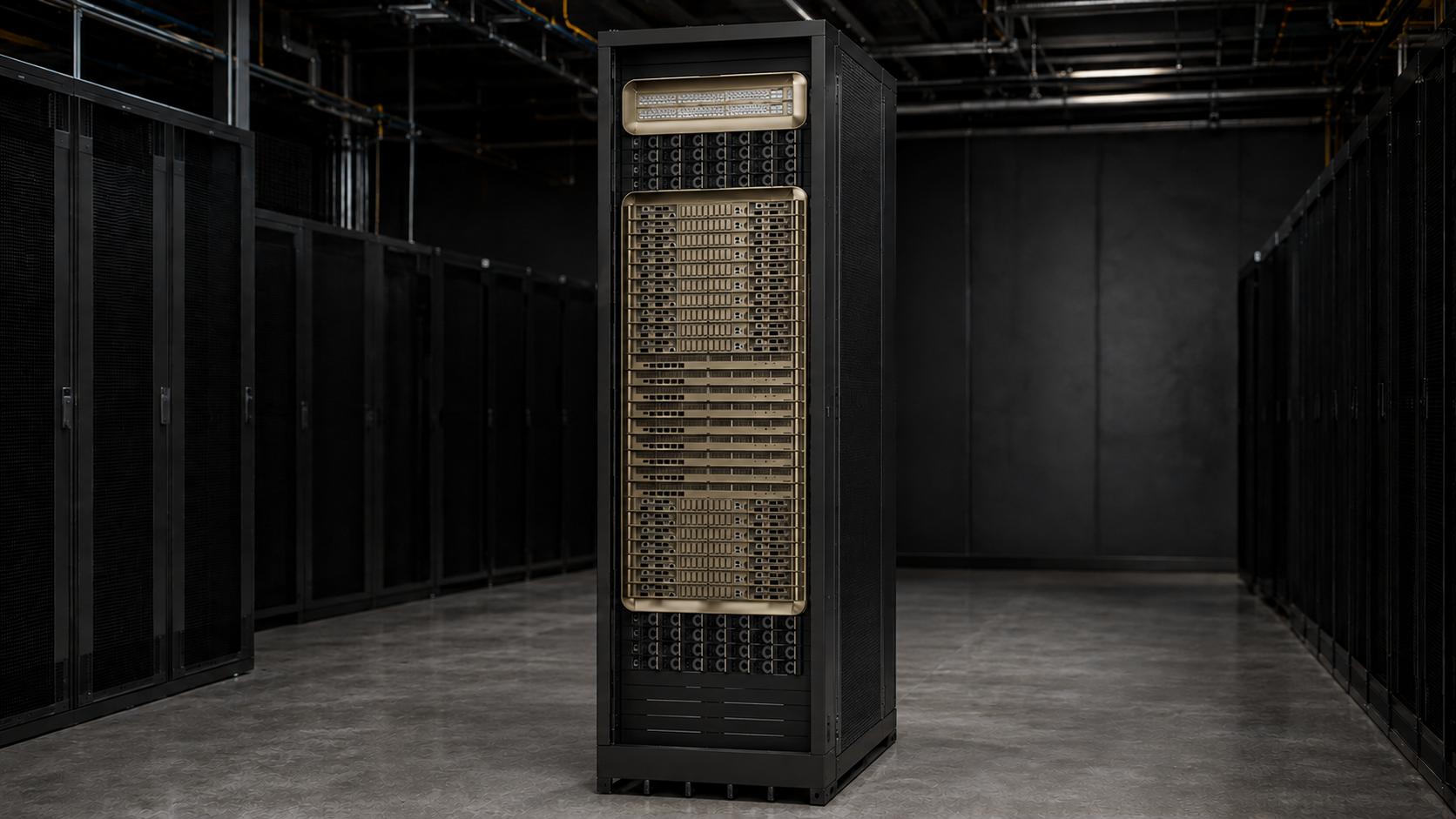
Data centers house the hardware that powers AI. Every time you prompt AI to receive an answer you generate “tokens” which requires energy. Tokens are tiny units of data stemming from bigger chunks of information, these tokens are processed by AI to learn the relationships between them and unlock the ability to reason, predict, and generate. Tokens include words and punctuation within strings of text, ai learns through language and this is energetically intensive. Data centers are where tokens are generated and queries are processed. They can host tens of thousands to hundreds of thousands of servers. Servers are masses of racks which are the machines comprised of chips that store, process, and deliver data via networking. Certain racks can potentially connect thousands of GPUs which all individually contain billions of transistors constantly firing. All of these complex systems working in tandem require an unforeseen level of power.
The United States' electrical grid has not been updated in nearly 60 years causing it to be unprepared for the demands of the modern world. U.S. demand for electricity is estimated to increase 2% a year for the next 2 decades, this can not be supported on our current grid. The need for nuclear energy has never been higher and legislature is expected to be changed in the coming years to support the development of nuclear energy. Nuclear energy generates electricity without releasing greenhouse gasses or particulate matter in the form of smoke. Nuclear energy only emits clean steam. Small modular nuclear reactors will see more development and be deployed on a large scale in the coming decade.
Expansion and modernization of our grid is inevitable which presents a unique investment opportunity that is tangentially related to AI. With the rapid expansion of the emerging economies in Africa, East Asia, India, and South America coalescing with a global technological revolution we will see unprecedented demand for energy. Energy is one of the most important areas requiring expansion the United States has yet to aggressively pursue.

Layer 2
02
Compute
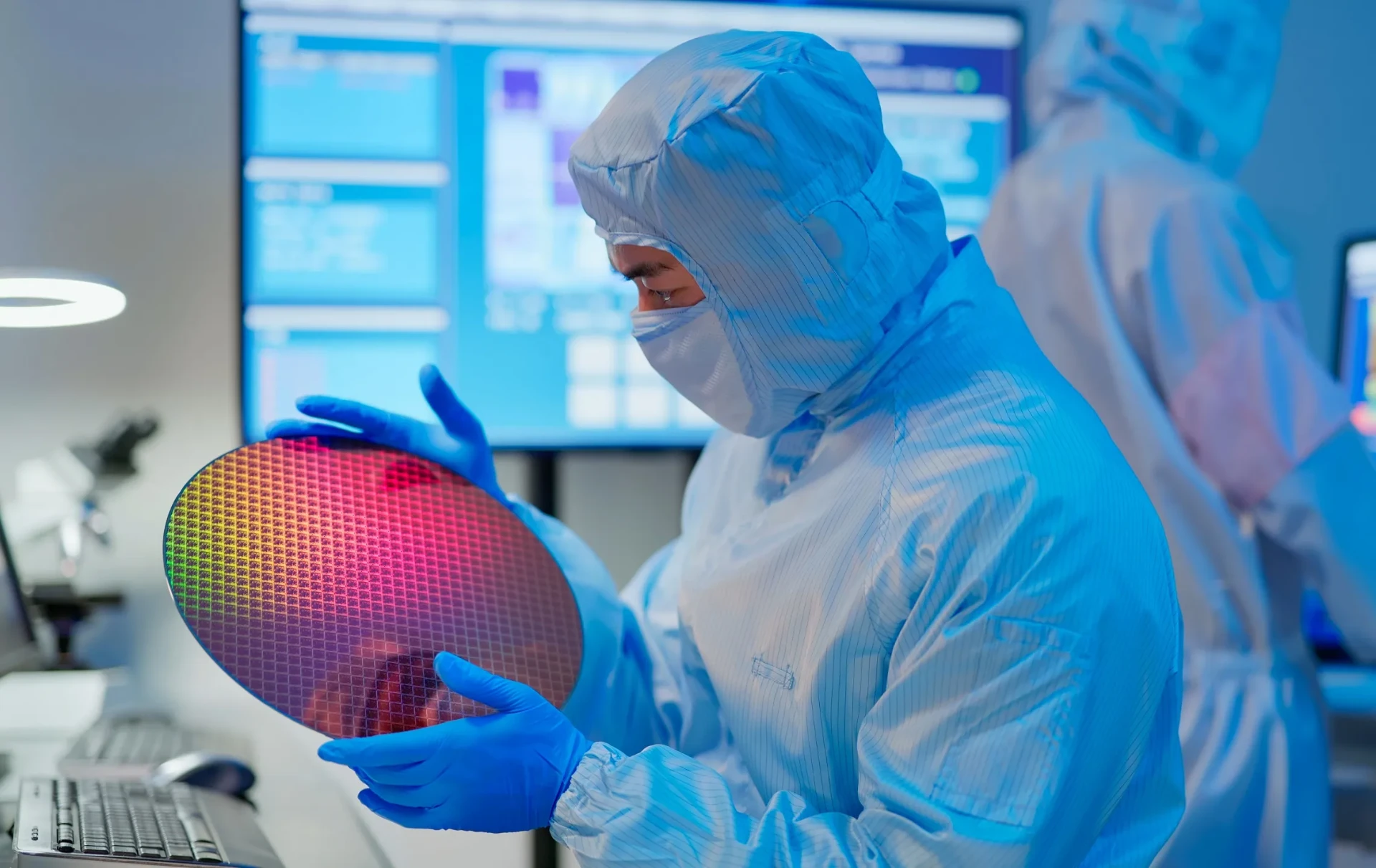
Semiconductors are the heart of compute
During the training process this layer is where AI models run and perform mathematical calculations to learn patterns. This pattern learning gives it the ability to generate responses, or, in the case of agents, the ability to perform actions to fulfill tasks. Compute is how you turn a question into an answer or a task into a completed action.
Semiconductors are the chips that make machine learning possible. GPUs (graphics processing unit) are an electronic circuit designed to rapidly process and render images, video, animations, and text. HBM (high bandwidth memory) chips complement the GPU by minimizing data transfer distance, lower power consumption for every piece of data transferred, and allows GPUS to handle larger datasets. CPUs (central processing unit) are the primary component that processes the signals and makes computing possible. It fetches instructions from memory, performs the required tasks, and sends output back to memory. It handles all computing tasks required for running the operating system and applications.
The supply of compute is vastly lower than its demand, which is limiting researchers ability to further develop AI. There is an expansion underway to build the infrastructure to access more compute. Hyper scalers (Amazon, Google, Meta, and Microsoft) are set to spend over 700 billion dollars in 2026 alone and are projected to spend even more in 2027. This spend in large part is going to compute. Capital is flowing to chip makers in a frenzied attempt to acquire compute before their competitors have an advantage.
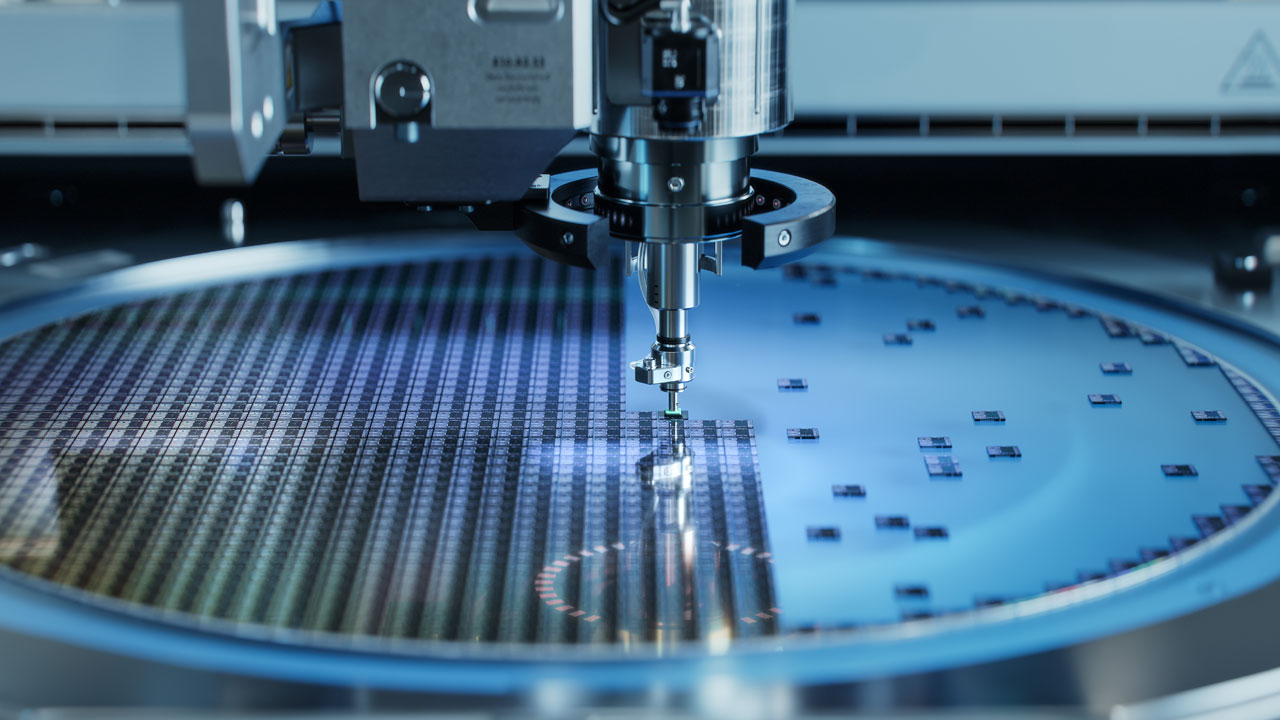
The process of creating a semiconductor chip is arguably the most technologically challenging process humanity has created
Firstly, the chips must be designed. Integrated circuit design is the process of making the layout and structure of a chip. Circuit diagrams specify the components, logical operations, and electrical characteristics of the circuits. Once these schematics are fully designed they are sent to a foundry (fabricator) where the circuit is manufactured. TSMC is the worlds leading foundry with 73% market share.
The next process begins with... sand. The sand is melted into liquid silicon (silicon is a semiconductor which means it is a material that conducts electricity) which is then purified and thinly sliced into something called a wafer. Through a process called deposition, thin films of various materials are added to the wafer which create the layers of microchips. This newly deposited layer undergoes a process called photolithography where the ultra intricate patterns are imprinted on the wafer. Firstly, the wafer is coated with a light-sensitive material called photoresist and then it is exposed to UV-light through a mask or stencil which contains the blueprint on a specific circuit design for that chip. ASML has developed a DUV machine for the photolithography step and they are the only company with that technology. Next is etching which is the process of removing layers of material from the wafer with a chemical product which creates the different circuit paths. The material that's no longer covered by photoresist can be etched away allowing the desired patterns to emerge. The wafer then undergoes doping where impurities are intentionally introduced to modify the electrical properties of the silicon. Specific areas need to be doped in order to create both positive and negative charge carriers which forms transistors. Transistors are what control electricity. The processes of deposition, photolithography, etching, and doping are all repeated hundreds of times to build the transistors onto the chip and then the metal pathways that connect the transistors.
Of the world's largest companies, an increasing number of them are directly involved in the design, fabrication, and distribution of semiconductors. Semiconductors have become so valuable that Amazon, Google, and Microsoft have expanded their businesses to designing in house chips so they are less reliant on outside companies for the development of their products. This strategy is referred to as vertical integration (vertical integration where a business owns or controls multiple stages of its supply chain). The worlds most powerful businesses are increasingly become more in control of their operations. Amazon, Apple, Google, Microsoft, and NVIDIA are vertically integrated and the most well positioned businesses to benefit from AI once it is widely deployed and adopted.
Layer 3
03
Infrastructure
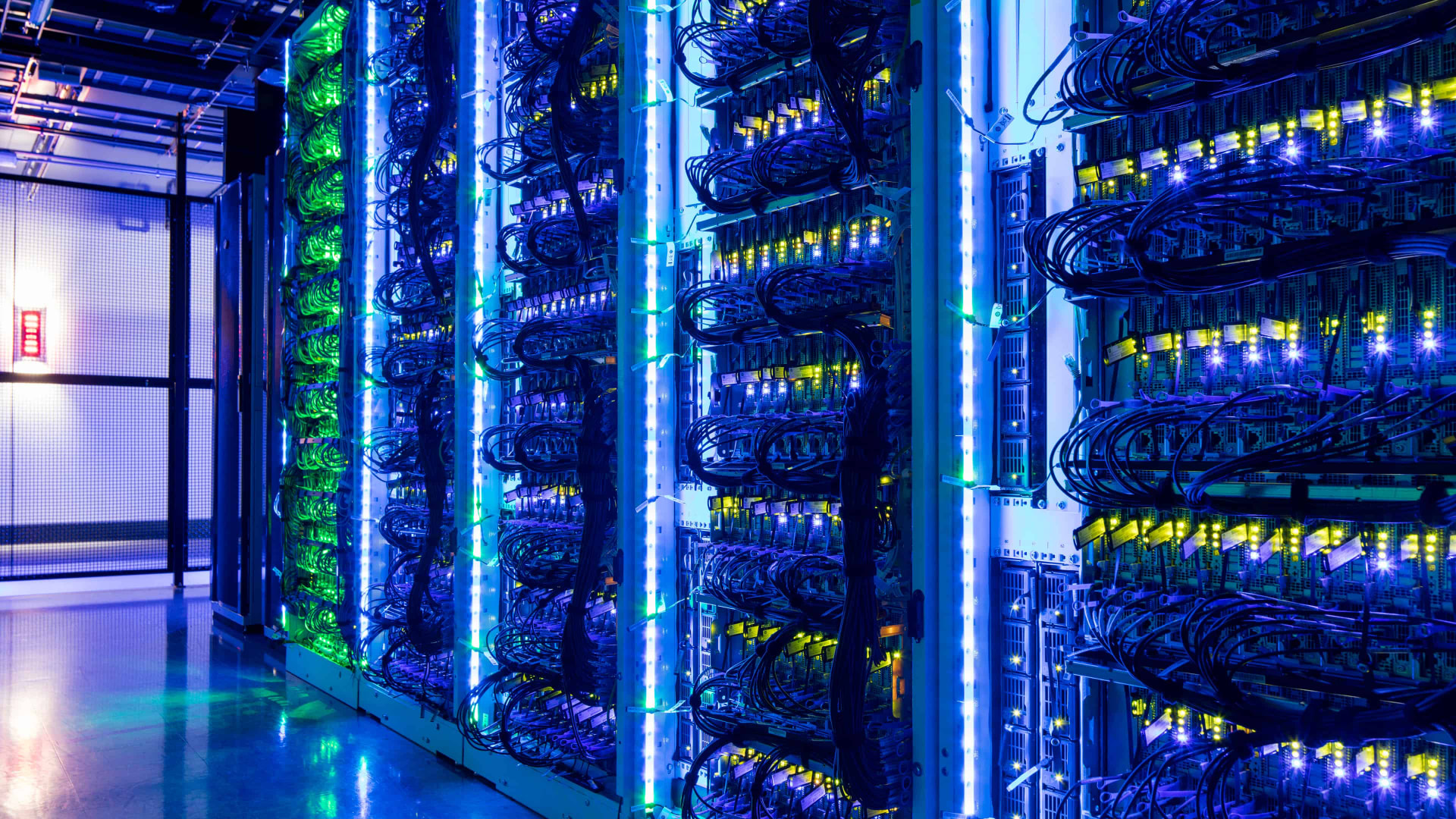
Data centers
Data centers are the physical space where all of our online data resides. These are multi purpose facilities that store and transfer data from your internet usage as well as host AI training and inference. This layer is where cloud computing resides and is where many of the largest companies generate massive amounts of their revenues from. The “cloud” is just a pretty word for a computer and data centers host masses of these computers. The cloud providers allow you to use the internet without you needing to store all the data you accumulate, they store it for you.
All of the hardware powering AI reside in data centers. The racks house all of the machines that are referred to as compute. When companies say they are compute constrained it means they do not have enough access to data centers. Demand for data centers is projected to triple by 2030 with $7 trillion of investment backing this. Semiconductor companies will see the majority of this investment over the course of this buildout. Once these new data centers come online the providers of the compute will see massively increased revenue.
Interactive system map
From Power to Training and Inference.
More details about AI system
Plain terms
- Training
- Teaching a model by adjusting its weights across enormous amounts of data. Compute-heavy and run in long batches.
- Inference
- Using the finished model to produce an answer. Cheaper per run than training, but run constantly at scale.
Sources
- TrainingAI learns from data.
- ModelWhat training creates.
- InferenceAI answers a request.
- ApplicationThe useful product people pay for.
Large Language Models (LLMs) are sophisticated mathematical functions that predict what word should come next for any piece of text. It assigns probabilities for all possible next words. The way a model behaves in dependent on its “parameters/weights”, a change in parameters is a change in probability of what the next word will be in a string of text. Open AI GPT-1 model had 117 million parameters in 2018, now in 2026 every frontier model is training on multiple trillions of parameters. When training first begins, the parameters are random and then as text is processed the parameters are further refined. One example of how a model can be trained: A sentence is given to a model and only the last word is missing, the prediction the model makes is compared to the true unknown last word, scientists then tweak the parameters to achieve the highest likelihood of the model predicting that last word. This is done with many trillions of strings of text to train one model. This process is just the pre training before more rigorous methods are applied. This training is only possible on the advanced GPUs we have today because they allow models to perform parallel operations (a plethora of operations can be executed simultaneously).
AI used to read one word at a time to predict the next word until Google developed the transformer which allowed the model the read all the words in at once. The training process only works with continuous values so you have to encode language using numbers. Each word is associated with a list of numbers and the meaning of each word is encoded to a corresponding number. Through a special operation called “Attention” all of the lists of numbers can talk to one another and refine the meanings they encode based on the context around the words all done in parallel. Researchers provide the framework for the model but the generation is entirely up to the model itself and this is why we call it artificial intelligence.
Layer 4
04
The Models

This layer is what everyone immediately thinks of as AI. If you've used AI and were disappointed with the model you used and didn't get the hype, understand that you do not have access to the advanced models that frontier labs are working with. The leading models have evolved exponentially to the point where previously unsolved mathematical equations have been solved. A few months ago Open AI had a model disprove the planar unit distance problem posed by Paul Erdős in 1946. Just a few days ago one of Anthropic's models found a mathematical flaws in the algorithms used for data encryption. Google designed a model called alpha evolved which helped them design their newest chips for their most powerful TPUs (tensor processing unit which serve as Google's alternative to NVIDIA'S GPUs). Googles alpha evolved model was also able to discover new mathematical truths. China has also led the way with open source (you can customize to code to your liking) models pushing our closed source (the code is set by the lab and unchangeable) models to advance faster. Chinese open source models don't require a subscription (still cost money to run), and Kimi k3 recently closed the gap between open and closed source from a benchmark perspective. These models are capable of deep reasoning and contextual understanding far beyond what the general population is aware of at this stage.
Open AI and Anthropic are the consensus leading models. The primary focus is no longer to improve the models because we've already reached a point of super intelligence. Cost is now the issue. The frontier labs are incredibly expensive and businesses are finding cheaper alternatives. Amazon, Microsoft, and Google all provide competent alternatives at a fraction of the cost. China provides comparable models at an even cheaper cost than these alternatives. There is currently a geopolitical battle being fought with china surrounding semiconductors and AI models themselves. There is an argument to be made that letting U.S. companies utilize Chinese open source models will benefit us greatly. The largest U.S. businesses can afford models from the frontier labs or to build their own but small businesses cannot afford either of these as it stands. Open source would allow small companies to tailor the models code to their liking and this would greatly increase productivity for businesses with less resources.
Anthropic and Open AI provide the most powerful models for both individuals and businesses. These models are capable of advanced reasoning and exceptionally complex mathematical calculations enabling scientists to solve the worlds most pressing questions. Open AI reached 700 million customers in less than 2 years which is faster than any other consumer product in history. As with many other layers Amazon, Microsoft, Google, and NVIDIA also provide models for both individuals and businesses. These companies are branching out towards models for cyber security on top of their general purpose models and coding models.
Who builds the models
OpenAI
Private. Alongside Anthropic, provides the most powerful models for both individuals and businesses, capable of advanced reasoning and mathematical calculations. Reached 700 million customers in less than 2 years, faster than any other consumer product in history.
Anthropic
Private. A consensus frontier leader whose models are used to solve the world's most pressing questions — one recently found mathematical flaws in algorithms used for data encryption.
Google DeepMind
Gemini is trained on Google's own TPUs and offered at a leading low price point; AlphaEvolve helped design their newest TPUs and discovered new mathematical truths.
Microsoft AI
A strong lineup including MAI-Image-2.5, MAI-Transcribe-1.5 and MAI-Thinking-1, plus value versions competitive with the world's leading cost-effective models.
Amazon & NVIDIA
As with many other layers, both provide models for individuals and businesses, branching into cyber security and coding models on top of general purpose ones.
Open source
Chinese open source models are free, and Kimi k3 recently closed the gap between open and closed source. Capability is no longer the constraint — cost is.

Layer 5
05
Applications
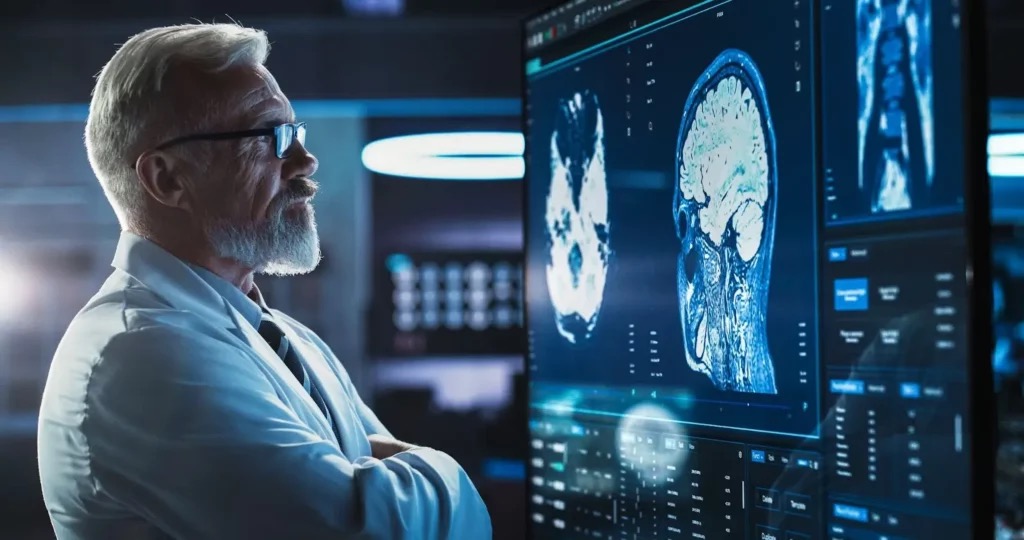
This is where the technology is applicable to the real world and its profitability is widely realized. We are currently not at this point but this technology is exponentially evolving and super intelligence is already available at certain price points. When the expansion of infrastructure is complete and compute is readily available, we will see incredible advancements in every industry. The optimistic ideal is breakthroughs in science, medicine, and transportation will usher in a new era of abundance as a result of AI. Whether the wealth created will be evenly distributed across the population or not remains to be seen but the potential for economic expansion as a result of this technology is theoretically limitless. Our hope is fair distribution of wealth as a result of mass automation of labor, regardless the advancements in many different industries will increase everyone's quality of life. Robotics will be the next evolution of AI and will be substantially contributing towards the economy within the next decade. Automated services will become even more precise and efficient than we could have ever imagined. The sky isn't even the limit with this technology, we will have data centers in space and development of infrastructure on the moon within this millennium. It is impossible to predict what's to come but the world will soon be a very different place and investing in this future before the world catches on will lead to exceptional returns.
AUGUST 10,2026
On August 10th, NVIDIA announced a partnership with Apollo, BlackRock, Blackstone, Brookfield, Goldman Sachs, and KKR to establish financing platforms centered around AI compute infrastructure. This strategic partnership will mobilize over $500 billion of third party long term capital which will flow back to NVIDIA in the near future.
“Compute used to be technology, now it's infrastructure.” This means compute is now an investable asset class. We are witnessing collaboration amongst both the entire chipmaking value chain, and now the world of finance.
Consider watching this unprecedented interview with the world's most prolific financiers explaining that AI is here and its infrastructure will power the United States' future.
AI Value-Chain Portfolio

Most Important players: A multilayered medium-long term comprehensive portfolio aimed to capture returns across the entire value chain associated with AI. This selection aims to benefit from short term momentum in the form of the semiconductor designers and manufacturers as well as long term beneficiaries in the form of the most important players in the application layer. The energy providers will round out this portfolio creating a high return to moderate risk profile.